PARTS OF THIS SITE CONTAIN MATURE CONTENT


12-3
2026:
From Coffee to Cosmos

ebook on Amazon
Great non-fic book
Okay, guys, it's just not happening. I'm trying to come in here and tell you all about my exciting, different non-fic book but I just had a stroke two weeks ago and am still recovering, so the excitement just won't muster. Instead of me getting excited, which clearly is a bust...maybe you can get excited for me?
Because this book is really quite awesome if you like wry observations and catchy snark. Best of all, it's only 99 cents in the US store, so once you read the excerpt you'll want to grab it before Sunday.
Enjoy excerpt below...
Love this book as much as I do? It sure could use a few reviews...I gave it a try but ended up hospitalized...LOL. Mean ol' Murphy! Link to the review page right here:
What if I told you the same six step approach works for:
- Morning coffee routines
- IKEA furniture assembly
- Pyramid construction and maintenance
- and even Colonizing Mars?
Discover the Universal Creative Framework that governs all human achievement -- proven through millennia of success and failure, taught by animal professors, and guaranteed to revolutionize how you think about systematic creativity.
Chapter 1 Tuesday’s Discovery
I was working on a database update on a Tuesday afternoon when suddenly, I had the most awesome epiphany. Like to hear it? Here it goes...
Picture this: I'm sitting there, minding my own business, building table relationships and trying to make sense of foreign keys, when my brain decides to have a complete meltdown. Not the bad kind--the kind where reality suddenly slams right in there and starts explaining itself. The "holy crap, I think I just figured out how everything works" kind.
See, I'd been coding for years, writing romance novels for even longer, and communing with all my animal friends since the moment I'd first learned to crawl. Normal Tuesday stuff, right? But there I was, staring at my database structure, when it hit me like a freight train carrying enlightenment.
Every single thing I'd ever done successfully has followed the exact same pattern. Six steps. Always six steps. Never five, never seven. Six.
But here's the crucial thing you need to understand right up front: while the six steps are universal, each step adapts to whatever you're actually building. Castle construction uses completely different Step 3 patterns than cake baking. Mars colonization requires totally different Step 2 materials than creating a paying blog site. The framework is universal - the implementation is domain-specific.
Think of it like this: every successful recipe follows the same basic pattern (ingredients → preparation → cooking → presentation), but obviously you don't use the same ingredients to make chocolate cake and beef stew. Same framework, different applications.
Want to know what the six universal steps are? Of course you do. Otherwise, why would you be in here?
The Universal Creative Framework:
Six Steps to Success in Any Domain
Step 1: Define Probable Uses (Purpose Clarity)
What is this actually for? Seriously. Not what you think it should be for, not what would sound impressive at dinner parties, but what you're
genuinely trying to accomplish. I learned this the hard way when I spent three hours making the perfect cup of coffee only to realize I was
trying to avoid writing a difficult scene. The coffee was excellent. The avoidance...well, should have been avoided.
Step 2: Define Needs-Based List (Requirements Analysis)
What do you actually need to make this work? And I mean actually need, not the seventeen things you think might be nice to have. So, in other
words, not twelve gemstones and a bowl of cashews when you're trying to create a sculpture of an anteater, go get images of an anteater and the
medium you intend to sculpt, right? Makes a lot more sense. Also saves you from buying unnecessary junk.
Step 3: Select Patterns/Structures (Strategic Planning)
What approach should you use? This is where most people get creative and start inventing solutions that already exist. Don't reinvent the wheel
unless the wheel is genuinely broken. When building my mug store database, I didn't create a revolutionary new e-commerce structure. I used proven
patterns that work. Revolutionary is for artists. Functional is for getting stuff done.
Step 4: Write Up Specifics (Documentation)
Make it concrete. Write down the actual details, measurements, steps, whatever makes this thing real instead of a pretty idea floating around in
your head. I cannot tell you how many "brilliant" ideas I've lost because I thought I'd remember them later. Spoiler alert: I never remember them
later. Neither will you.
Step 5: Execute Process (Skilled Implementation)
Actually do the thing. This is where the magic happens, assuming you did steps 1-4 correctly. If you didn't, this is where everything falls apart
spectacularly and Murphy Kruger shows up to laugh at your misery. We'll talk more about Murphy later. He's basically the final boss of
productivity.
Step 6: Finalization Checks (Quality Verification + Maintenance)
Does it work as intended? Make sure it's usable - good enough for now - and get it out there for people to actually use. Here's the thing: there's
no such thing as a final product. There's no law anywhere that says once you've created something, it's set in stone forever. You're always welcome
to—and expected to—come back and have another look sometimes. Upkeep your brainchild, do a little maintenance, make sure it's still good and useful
over time. That's what Step 6 is really about.
That's it. Six steps. Applies to everything from making coffee to space colonization. I've tested it extensively. Coffee making: successful. Romance novel writing: freelanced like 300, made probably 30 that are my own. Space colonization: well, I haven't tried that one yet, but the framework is ready to give it a go.
But Wait, There's More:
The Three Universal Rules
While I was having my Tuesday database revelation, I realized something else. Every intelligent creature already knows three fundamental rules that govern all successful behavior. Animals follow them instinctively. Humans had to rediscover them because we're apparently slow learners.
Rule #1: Don't poop where you eat
Either for real, or metaphorically. The first because that shit is unsanitary (literally). But yeah, also, don't mess up your own environment,
workplace, or relationships. Don't create drama in your support system. Don't sabotage the things that keep you alive and functional. My tortoise
understands this perfectly. She has designated bathroom areas and designated food areas, and never shall the two meet. Humans struggle with this
concept and wonder why their lives are chaotic.
Rule #2: Don't stab anything you don't want dead
As in, don't burn a bridge you might want to cross again. Think before you act with permanent consequences. Don't damage relationships with words
or actions you can't take back. Don't destroy things you might need later. This applies to everything from business partnerships to family dinners.
Once you stab something, it tends to stay stabbed. Plan accordingly.
Rule #3: When seeking a mate for procreation, collaboration, or just to hang out, choose wisely
Your most important life decisions deserve careful consideration. This isn't just about romantic relationships—it's about any partnership that will
significantly impact your life. Business partners, creative collaborators, roommates, the works. Choose people who share your values and complement
your strengths. My animal teachers have this figured out completely. Humans treat it like a game show.
The Mind-Blowing Revelation
Here's what made me nearly fall out of my chair: I'd been unconsciously applying this framework my entire life. Every success followed the pattern. Every spectacular failure happened when I skipped steps or ignored the three rules.
Writing novels? Framework. Building websites? Framework. Training animals? Framework. Recovering from illness? Framework. Surviving family gatherings?
Framework.
The framework isn't something I invented—it's something I discovered. It's the underlying pattern that governs competent behavior across all domains. It's been hiding in plain sight while we've been making everything way more complicated than it needs to be.
And the best part? Once you see it, you can't unsee it. You'll start recognizing the pattern everywhere. Ancient civilizations that thrived? They followed the framework unconsciously. Modern businesses that fail? They skipped Step 1 or ignored Step 6. Historical disasters? Usually Murphy Kruger exploiting framework failures.
But I'm getting ahead of myself. We'll explore all of that later.
For now, just remember: Tuesday afternoon, database project, life-changing epiphany. The Universal Creative Framework that works for everything from coffee to cosmic colonization, supported by three rules that every intelligent creature already knows.
Pretty good for a random Tuesday brainfest, right?
Next up:How this framework explains why civilizations rise and fall, why your coffee maker broke right when you needed it most, and why Murphy Kruger has been humanity's greatest nemesis since the dawn of time...
Chapter 2 Meet Murphy Kruger –
The Universal Framework Saboteur
You know Murphy's Law, right? "Anything that can go wrong, will go wrong." Well, let me tell you about that entire story, instead of just the part that got dumbed down so you could avoid freaking out innocent young children. He's not just about things going wrong—he's about making your worst nightmares jump right out of your head and start terrorizing your reality.
Murphy's Law is passive. It just sits there waiting for stuff to break. Murphy Kruger? He's actively hunting your success. He's got a rusty wrench, a grudge against human achievement, and an uncanny ability to show up right when you're about to succeed at something important.
The Nightmare Bringer
Murphy Kruger doesn't just make things go wrong—he studies your specific fears and insecurities, then weaponizes them against you. Building something important? He'll whisper exactly the wrong advice at exactly the right moment to make you sabotage yourself.
Planning a perfect wedding? Murphy Kruger ensures it rains on the one day in three months when clear skies were predicted. Finally ready to launch your business? He'll make sure your biggest client calls to cancel right as you're signing the lease. About to finish that novel you've been working on for years? Computer crash. No backup. Of course.
But here's what makes Murphy Kruger truly diabolical: he doesn't just attack randomly. He's got a strategy. He knows exactly where every framework is vulnerable, and he strikes with surgical precision.
Murphy Kruger vs. The Universal Framework:
The Eternal Battle
Murphy Kruger has been the anti-framework force since the beginning of time. He's literally the universal opposer to systematic success. While you're trying to build something useful following the six steps, he's right there with his rusty wrench, ready to sabotage each and every one.
Your Framework Step 1: Define probable uses (get clear on purpose)
Murphy's Whisper: "Build what YOU think is cool! Don't worry about what people actually want!"
Your Framework Step 2: Define needs-based list (figure out requirements)
Murphy's Sabotage: "That crucial thing you need? Oh, it's discontinued. Forever."
Your Framework Step 3: Select patterns/structures (choose your approach)
Murphy's Your perfect plan? Here's a wrench in the works!"
Your Framework Step 4: Write up specifics (document the details)
Murphy's Chaos: "Those measurements? Off by one critical digit. Enjoy rebuilding everything!"
Your Framework Step 5: Execute process (do the actual work)
Murphy's Timing: "Everything was going so well... until RIGHT NOW!"
Your Framework Step 6: Finalization checks (quality verification + maintenance)
Murphy's Favorite Playground: "Success is within reach? NOT TODAY, BUDDY!"
His Signature Moves
Murphy Kruger has been perfecting his craft for millennia. Here are some of his greatest hits:
The IKEA Slasher: Appears just as you're installing the final piece of furniture. SNAP goes the crucial screw that you absolutely
cannot replace!
The Coffee Killer: Strikes right when your perfect brew timing hits its peak. Power outage! Water shortage! Coffee maker spontaneously
combusts!
The Technology Terrorist: Waits until you're three hours into an important project with no recent save. Blue screen of death, every time.
The Social Saboteur: Ensures your most embarrassing moment happens in front of exactly the people you're trying to impress.
The Deadline Destroyer: Makes sure every possible delay happens in the final 10% of any important project.
His Weapon of Choice:
The Rusty Wrench of Finalization Failure
Murphy Kruger will attack whichever step he can sink you on, but his absolute favorite is smashing Step 6. Why? Because that's when he gets to destroy the most hope. His rusty wrench isn't just any wrench—it's specifically designed to attack when success is literally within reach. Right when you're about to complete something, when you've invested all that time and energy, BAM! Everything falls apart and he gets to feast on maximum disappointment.
He's been using this same weapon throughout history:
Titanic: "Nice unsinkable ship... would be a shame if something... frozen... appeared..." 🧊
Library of Alexandria: "Lovely collection of all human knowledge... would be a shame if something... combustible... happened..." 🔥
Your computer: "Important document you've been working on for hours... would be a shame if you forgot to save..." 💻
Murphy's Lair:
The Basement of Broken Step 6s
Deep beneath reality, Murphy Kruger has a basement filled with all the things that almost worked:
IKEA furniture missing ONE crucial screw
Coffee makers that died mid-brew
Birthday cakes that fell five minutes before the party
Perfect emails sent to the wrong recipients
Novels that crashed right before the final save
Relationships that exploded right before the wedding
It's a monument to human frustration, and Murphy Kruger sits there polishing his rusty wrench, planning his next attack.
His Catchphrase: "Just when you think you're done... I'M BACK!" 🔪😈
Why You Need to Know
About Murphy Kruger
Understanding Murphy Kruger isn't about paranoia—it's about preparation. Once you know his patterns, his whispers, his favorite attack points, you can Murphy-proof your framework applications.
Every successful human achievement has had to deal with Murphy Kruger. The difference between lasting success and spectacular failure is usually found in how well you recognize his interference and plan around it.
The ancient Egyptians? They Murphy-proofed their pyramids so well they're still standing 4,500 years later. The Titanic designers? They fell for Murphy's "unsinkable" whisper and forgot to plan for icebergs.
The Universal Pattern
Here's the thing that'll really mess with your head: Murphy Kruger isn't random. He follows patterns. He's been using the same sabotage playbook for millennia, attacking the same weak points in human planning and execution.
Once you learn his patterns, you'll start seeing his fingerprints everywhere:
Every business that failed right before breakthrough
Every relationship that exploded right before commitment
Every creative project that died in the final stages
Every civilization that collapsed right at its peak
Murphy Kruger has been humanity's greatest nemesis since the dawn of time. But here's the beautiful part: the Universal Creative Framework is specifically designed to defend against his attacks.
Every step has built-in Murphy-proofing strategies. Every successful application of the framework is essentially a victory over Murphy Kruger's sabotage attempts.
Ready to learn how to beat him at his own game?
Next up: Step 1 - Define Probable Uses, and how Murphy Kruger tries to sabotage your purpose from the very beginning...
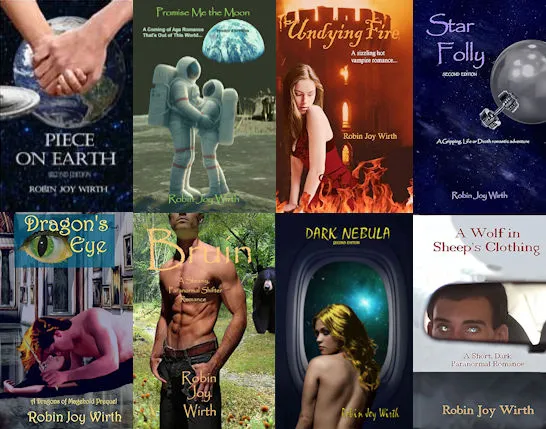
➤ Visit Bookland to Read Excerpts!
Robin's Amazon Page
Robin Joy Wirth
robin@redshadow67.com
948 S. Ainsworth Ave, #C
Tacoma, WA, 98405

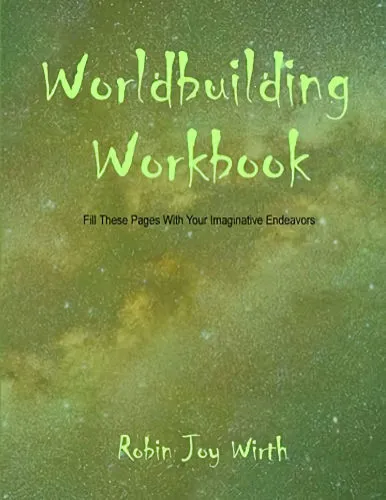
Use this low-content book to create characters, settings, internal or external factors that might affect the outcome of your fiction.
Fill the 200 8.5x11in pages with details, or even just doodle in there if you want... |
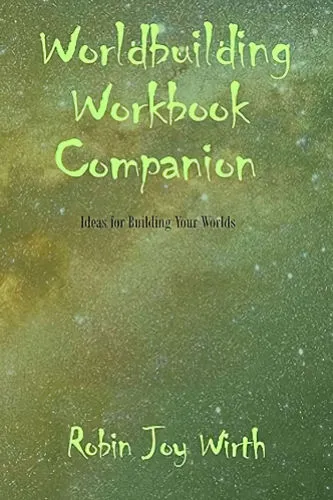
Written as a companion guide for the Worldbuilding Workbook, you can grab this as an ebook, or better yet purchase the paperbacks together for a more hands-on experience. This companion book is meant to be a sort of instruction manual on how you use your workbook, but also contains suggestions on how to use a three ring binder and create a workbook of your own instead. |